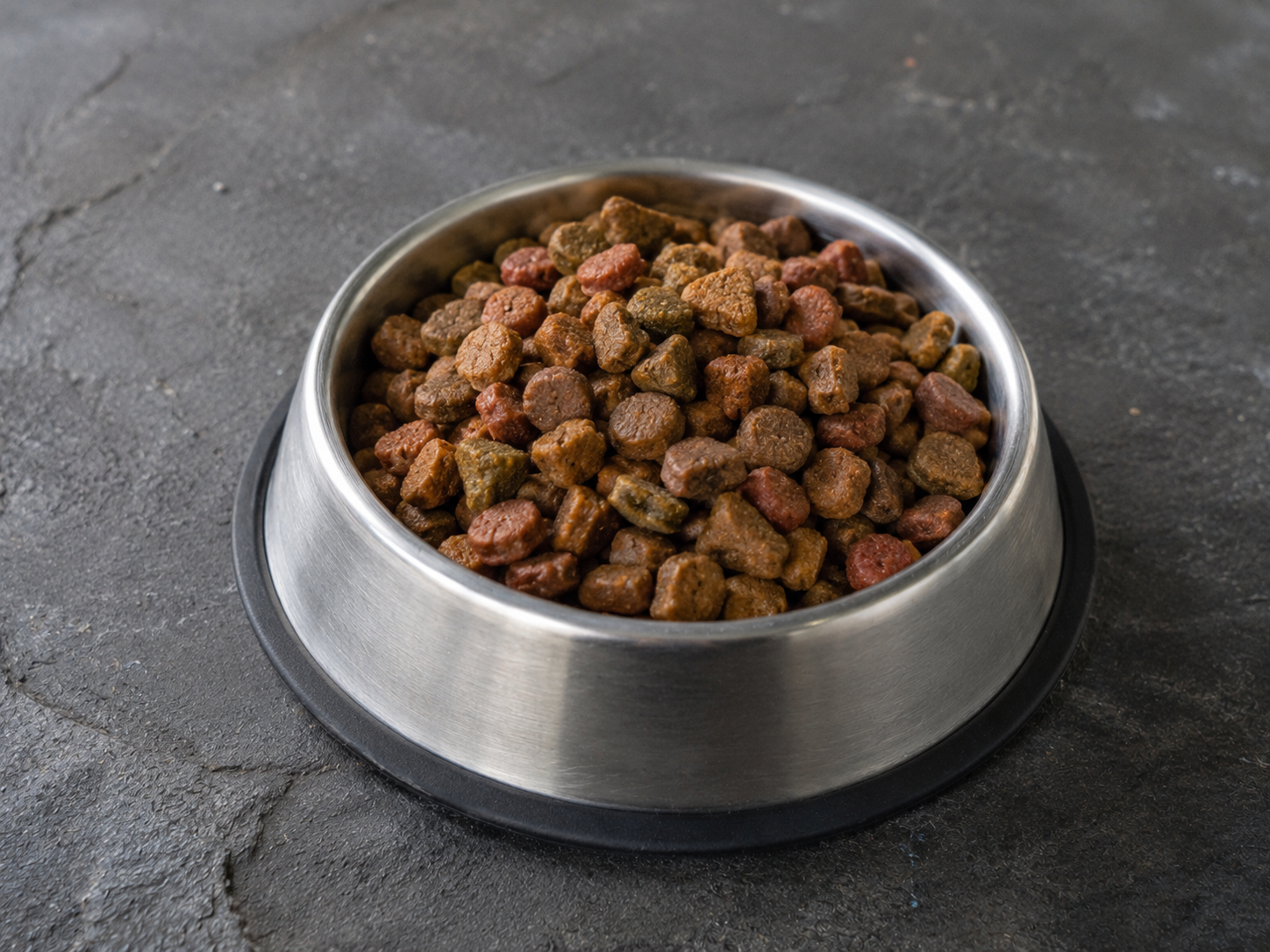
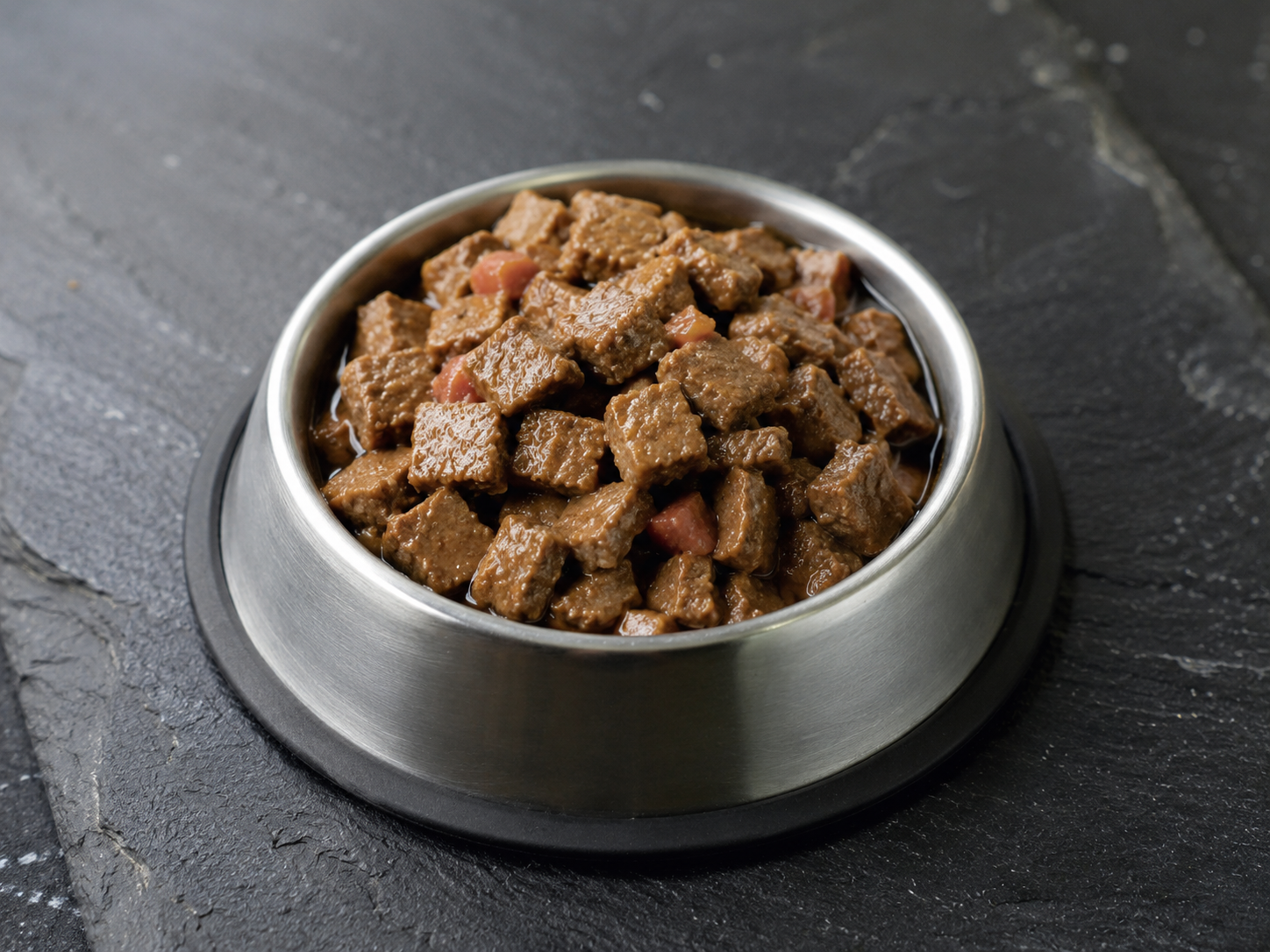
Wet dog and cat food is a complete, balanced commercial diet that doubles as an excellent food for certain omnivorous reptiles, most famously blue-tongued skinks. Each can combines meat protein, organs, vitamins, and minerals in a soft, easily eaten form, and its convenience and consistency are hard to match with home-prepared meals.
Nutrition Facts
Values vary by brand and formula, but typical as-fed numbers for quality wet food:
- Protein: 8–12% (complete animal protein with balanced amino acids)
- Fat: 4–8% (dog formulas run leaner than cat formulas)
- Moisture: 75–82% (excellent hydration, similar to whole prey)
- Fiber: ~1% (minimal, with none of the chitin of insect feeders)
Role in the Diet
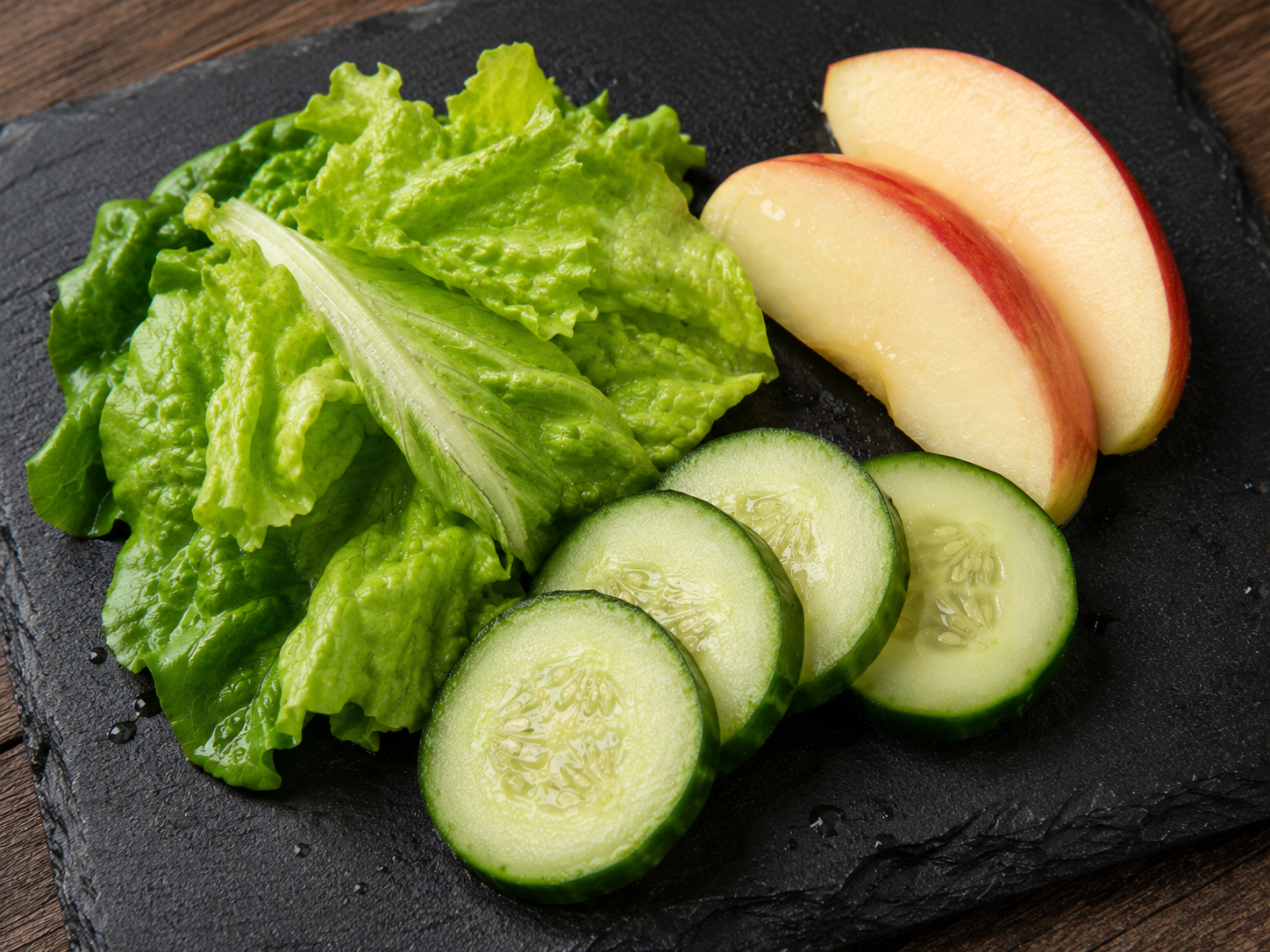
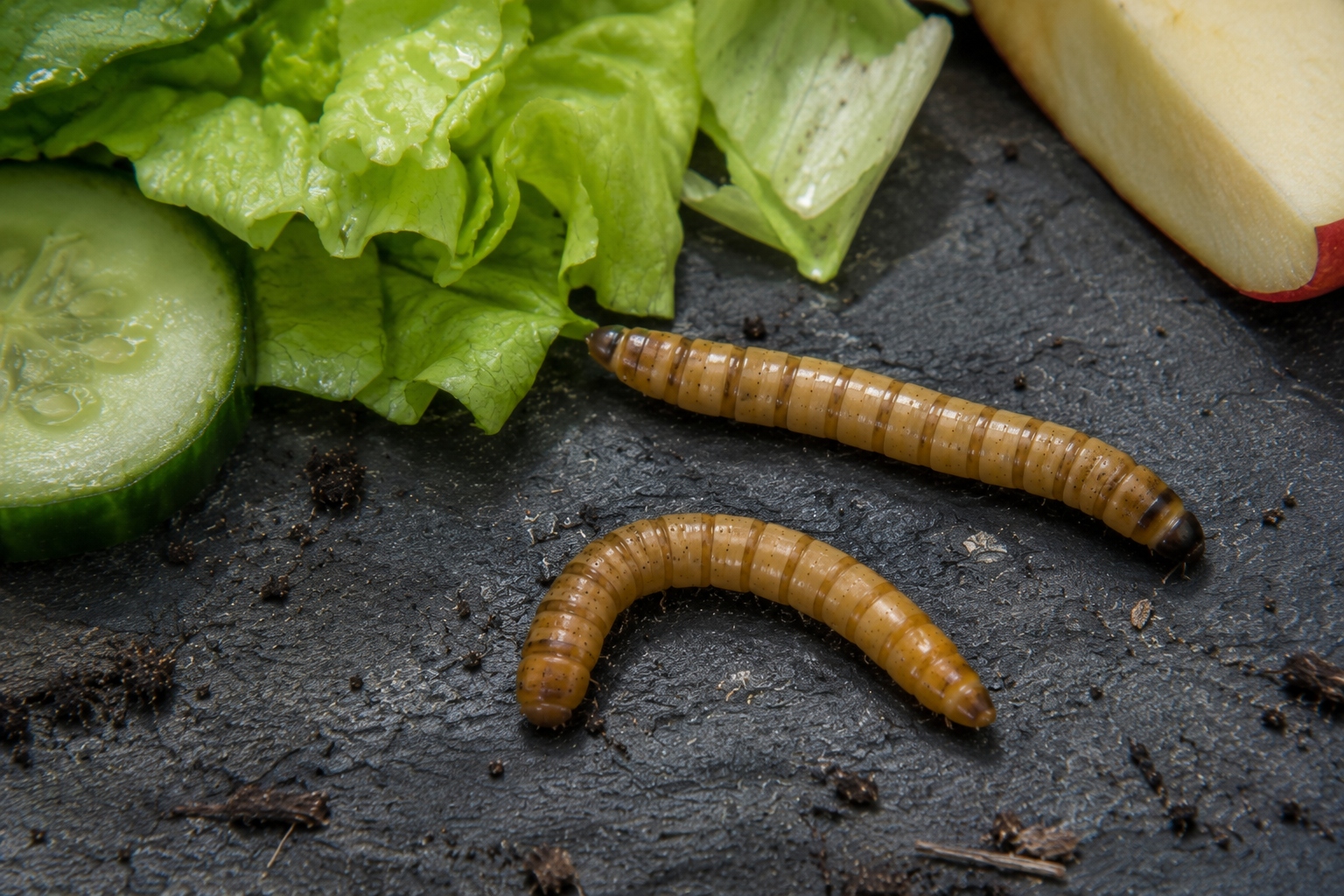
For blue-tongued skinks, high-quality wet dog food commonly forms the base of the diet, topped with vegetables and the occasional insect or egg. Because it’s formulated as a complete diet for mammals, it covers vitamins and minerals that whole insects alone can miss, and its strong smell makes it appealing even to picky eaters. Here it’s also what the resident cat and dog eat, which makes for efficient grocery runs.
Drawbacks
Wet pet food is formulated for dogs and cats, not reptiles, so formula choice matters: gravy-heavy, seasoned, or fish-based varieties are best skipped in favor of plain poultry or beef formulas with named meat as the first ingredient. It’s also calorie-dense compared to insects and greens, making obesity the main risk for skinks fed on it too generously. Once opened, cans spoil quickly and need refrigeration.
Fun Facts
Blue-tongued skinks are opportunistic omnivores that eat carrion, eggs, insects, and fallen fruit in the wild, which is why a balanced meat-based mush suits them so naturally. And the reason cat food differs from dog food isn’t marketing: cats require taurine and higher protein, while dogs tolerate a far more varied recipe, which is also why dog formulas are usually the leaner choice for skinks.