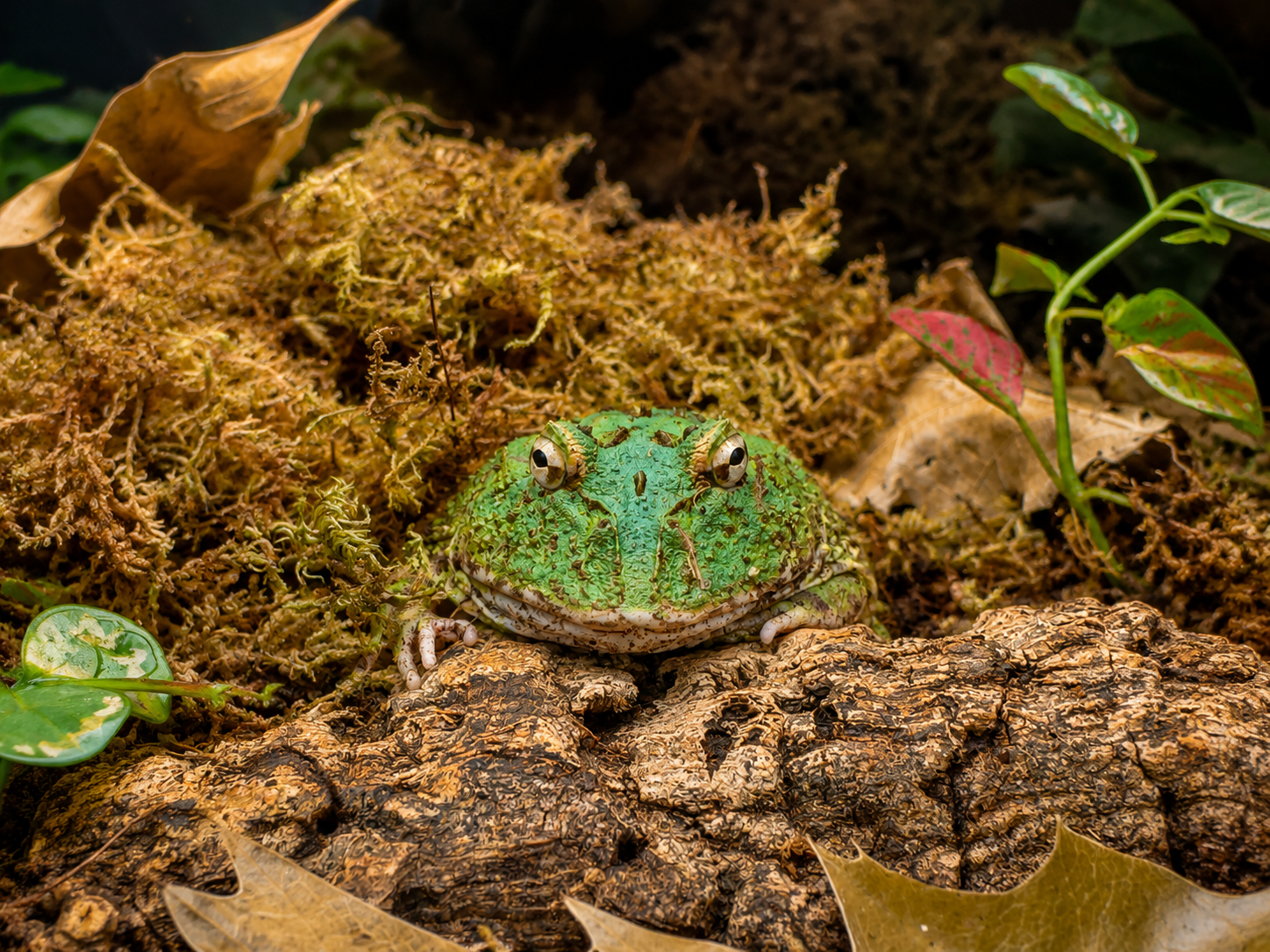
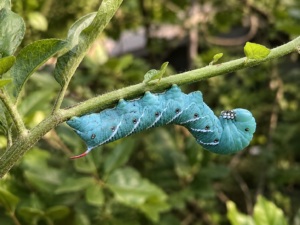
Peppermint is proof that you can be 90% mouth and still be adorable. She’s an ambush predator who takes her job very seriously. She spends her days half-buried and motionless, waiting for something edible to wander past. There is no hesitation in Peppermint’s world, only food and things that haven’t been identified as food yet. Her favorite meal is a juicy hornworm.
Pacman frogs (Ceratophrys cranwelli) come from the seasonal grasslands and forests of South America. They earned their nickname honestly: a round body, an enormous mouth stretching nearly half their width, and an appetite straight out of the arcade game. In the wild they’ll tackle insects, other frogs, and even small rodents, sometimes attempting prey nearly their own size. Females grow considerably bigger than males, and with good care they can live 10 to 15 years.
Fun fact: unlike most frogs, Pacman frogs have real teeth, plus two bony fang-like spikes on the lower jaw, and they’re not shy about using them. Herpetologists rank their bite among the strongest of any frog, comparable to a reptile many times their size. It’s why Peppermint, like Dumpling, is a look-don’t-touch resident: to a Pacman frog, wiggling fingers are just hornworms with bad disguises.
Animal Profile
| Species Group |
Amphibian |
| Scientific Name |
Ceratophrys Ornata |
| Common Name |
Pacman Frog |
| Sex |
Unknown |
| Source |
Magazoo |
| Acquisition Date |
April 8, 2026 |
| Time in Collection |
0.3 years |
| Native Region |
Gran Chaco, Argentina |
Native Region
Every animal in the collection is native to a specific region, which is marked on the map below.
Home vs. Native Weather
Every enclosure here recreates a slice of a real place. This is the weather at home in Montréal right now, side by side with the weather in this animal’s native range on the other side of the world.
|
Montréal |
Gran Chaco, Argentina |
| Local Time |
6:45 PM |
7:45 PM |
| Season |
Summer |
Winter |
| Conditions |
Overcast |
Clear night |
| Today High / Low |
30.2 °C / 20.6 °C |
25.2 °C / 9.2 °C |
| Air Humidity |
49 % |
65 % |
| Precipitation Today |
0.6 mm |
0 mm |
☁️
26 °C
Overcast · Montréal
🌙
23.8 °C
Clear night · Gran Chaco, Argentina
MontréalGran Chaco, Argentina
Enclosure Setup
Reptiles and amphibians depend on their enclosure to provide the right space, heat, and light that their bodies can’t generate themselves. This table includes information about this enclosure’s dimensions, type, and heating and lighting equipment.
| Enclosure ID |
H |
| Enclosure Type |
Glass Terrarium |
| Length |
24 inches |
| Width |
12 inches |
| Height |
16 inches |
| Floor Space |
2 square feet |
| Volume |
19.9 gallons |
| Heat Lamp |
No |
| UVB Lamp |
No |
Enclosure Climate
Reptiles and amphibians require specific environmental parameters to regulate their temperature, digest, and stay healthy. The charts below show the live soil moisture, air humidity, and temperature inside the enclosure.
Bioactive Setup
A bioactive enclosure is a self-sustaining ecosystem where live plants, natural substrate, and invertebrate cleanup crews break down waste the way a forest floor does. This table includes information about how this enclosure’s system is set up.
| Drainage Layer |
1 inch |
| Substrate |
Organic Soil, Coco Coir |
| Substrate Depth |
7 inches |
| Leaf Litter |
Oak Leaves, Maple Leaves, Forest Floor, Sphagnum Moss |
| Live Plants |
Yes |
| Cleanup Crew |
Isopods, Springtails |
| Mistings Per Day |
3 |
| Misting Duration |
30 seconds |
Staple Foods
Staple foods provide the macro and micronutrients an animal needs to stay healthy, from protein and fat to calcium and vitamins. Below are the food sources that make up most of this animal’s diet.
Occasional Treats
Treats add variety and enrichment, engaging an animal’s sense of taste and its instinct to hunt. Below are the foods this animal enjoys from time to time.
Enclosure Timelapse: Past Hour
Snapshots of the enclosure from the last hour, taken five minutes apart and replayed as a timelapse.
Enclosure Timelapse: Past Day
One snapshot of the enclosure from each of the last 24 hours, replayed as a timelapse.
Enclosure Heatmap: Past Week
Movement detected between camera snapshots, overlaid on the enclosure between 9 AM and 9 PM. The deeper the red, the more this animal has been active in that spot.
986 motion events recorded