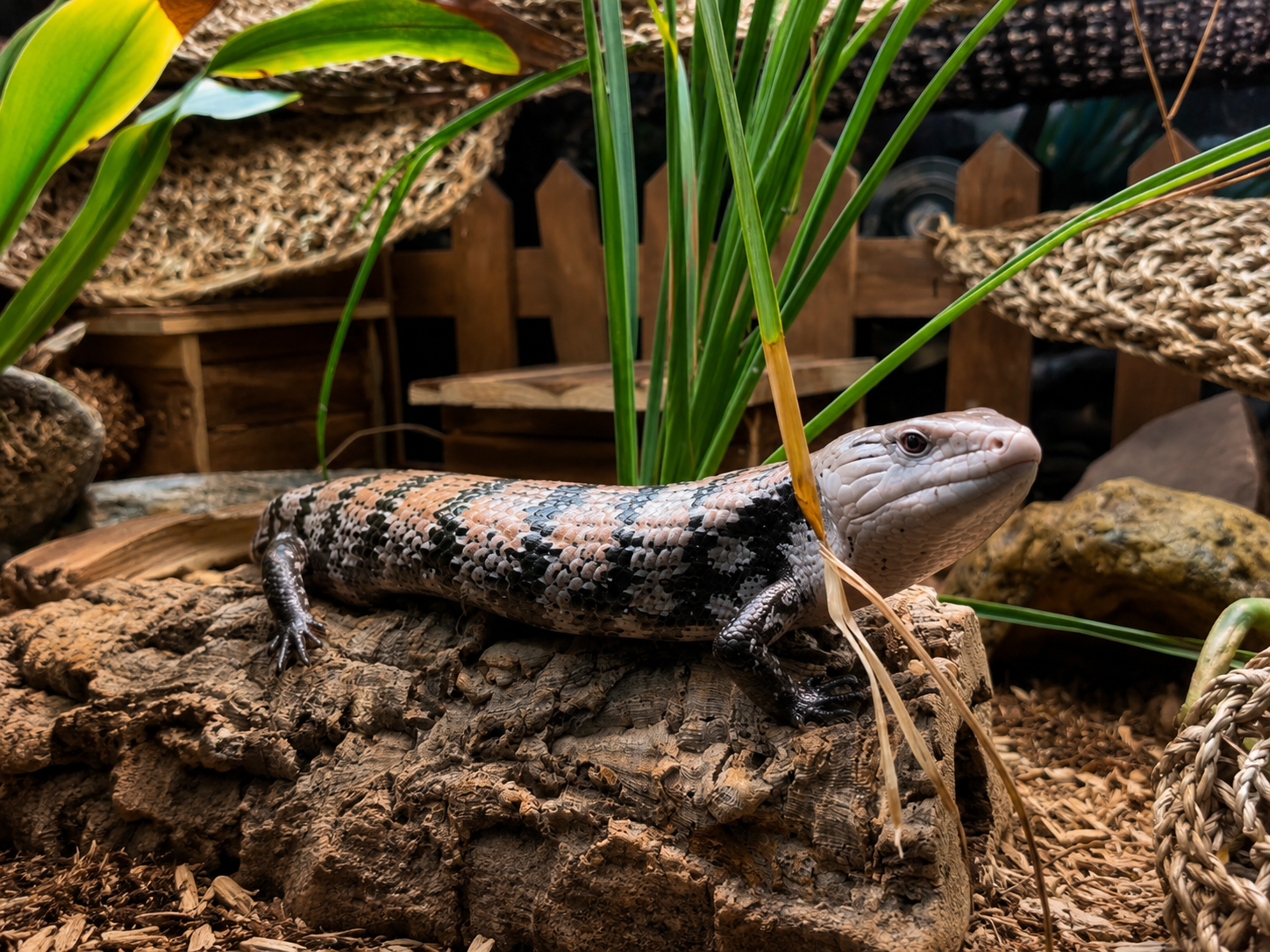
Pepper is the spice of the collection, which is exactly how she earned her name. She huffs and puffs when startled, but it’s all theater: that’s a scared skink telling you she’d rather be left alone, not an angry one. Pepper lives in a custom bioactive enclosure with underground tubing I built especially for her, because if there’s one place Pepper wants to be, it’s underground.
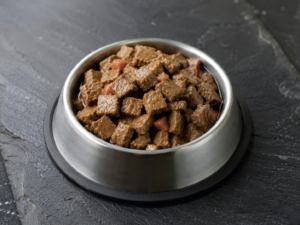
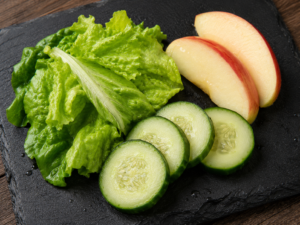
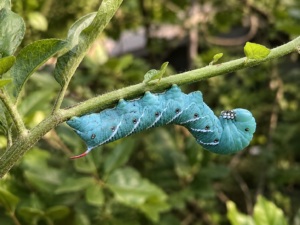
She loves hornworms and vegetables, but her staple is actually wet dog food. It sounds odd, but like dogs, blue tongue skinks are opportunistic omnivores, and a quality dog food covers the nutrients they need surprisingly well.
Indonesian blue tongue skinks (Tiliqua gigas) come from the tropical rainforests of New Guinea and the surrounding islands, where they cruise the forest floor eating almost anything they come across. Unlike their Australian cousins, they love high humidity and damp soil to burrow in. Indonesian blue tongues are also known for coming with more attitude than the Aussies, so Pepper is simply upholding a proud family tradition. With good care they can live 15 to 20 years.
Fun fact: that famous blue tongue is a defense weapon. When threatened, a skink gapes wide, sticks it out, and huffs, betting the sudden flash of blue startles the predator long enough to escape. The blue even reflects UV light, making it extra alarming to birds. And despite being lizards, blue tongue skinks don’t lay eggs: they give birth to live babies.
Animal Profile
| Species Group |
Reptile |
| Scientific Name |
Tiliqua Gigas |
| Common Name |
Blue Tongue Skink |
| Sex |
Female |
| Source |
Magazoo |
| Acquisition Date |
July 17, 2024 |
| Time in Collection |
1.9 years |
| Native Region |
New Guinea Rainforest, Indonesia |
Native Region
Every animal in the collection is native to a specific region, which is marked on the map below.
New Guinea Rainforest, Indonesia
Home vs. Native Weather
Every enclosure here recreates a slice of a real place. This is the weather at home in Montréal right now, side by side with the weather in this animal’s native range on the other side of the world.
|
Montréal |
New Guinea Rainforest, Indonesia |
| Local Time |
6:45 PM |
7:45 AM |
| Season |
Summer |
Winter |
| Conditions |
Overcast |
Clear sky |
| Today High / Low |
30.2 °C / 20.6 °C |
31.6 °C / 23.4 °C |
| Air Humidity |
49 % |
79 % |
| Precipitation Today |
0.6 mm |
0.1 mm |
☁️
26 °C
Overcast · Montréal
☀️
27.3 °C
Clear sky · New Guinea Rainforest, Indonesia
MontréalNew Guinea Rainforest, Indonesia
Enclosure Setup
Reptiles and amphibians depend on their enclosure to provide the right space, heat, and light that their bodies can’t generate themselves. This table includes information about this enclosure’s dimensions, type, and heating and lighting equipment.
| Enclosure ID |
E |
| Enclosure Type |
Custom Metal Enclosure |
| Length |
48 inches |
| Width |
23 inches |
| Height |
23 inches |
| Floor Space |
7.7 square feet |
| Volume |
109.9 gallons |
| Heat Lamp |
75 watts |
| UVB Bulb |
8W Reptile T5 HO UVB 12.5" 10.0 |
| Last UVB Change |
June 26, 2026 |
Enclosure Climate
Reptiles and amphibians require specific environmental parameters to regulate their temperature, digest, and stay healthy. The charts below show the live soil moisture, air humidity, and temperature inside the enclosure.
Bioactive Setup
A bioactive enclosure is a self-sustaining ecosystem where live plants, natural substrate, and invertebrate cleanup crews break down waste the way a forest floor does. This table includes information about how this enclosure’s system is set up.
| Drainage Layer |
1 inch |
| Substrate |
Organic Soil, Coco Coir |
| Substrate Depth |
7 inches |
| Leaf Litter |
Maple Samaras, Forest Floor, Sphagnum Moss |
| Live Plants |
No |
| Cleanup Crew |
Isopods, Springtails |
| Mistings Per Day |
3 |
| Misting Duration |
20 seconds |
Staple Foods
Staple foods provide the macro and micronutrients an animal needs to stay healthy, from protein and fat to calcium and vitamins. Below are the food sources that make up most of this animal’s diet.
Occasional Treats
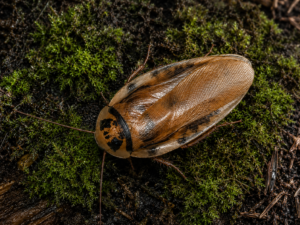
Treats add variety and enrichment, engaging an animal’s sense of taste and its instinct to hunt. Below are the foods this animal enjoys from time to time.
Enclosure Timelapse: Past Hour
Snapshots of the enclosure from the last hour, taken five minutes apart and replayed as a timelapse.
Enclosure Timelapse: Past Day
One snapshot of the enclosure from each of the last 24 hours, replayed as a timelapse.