
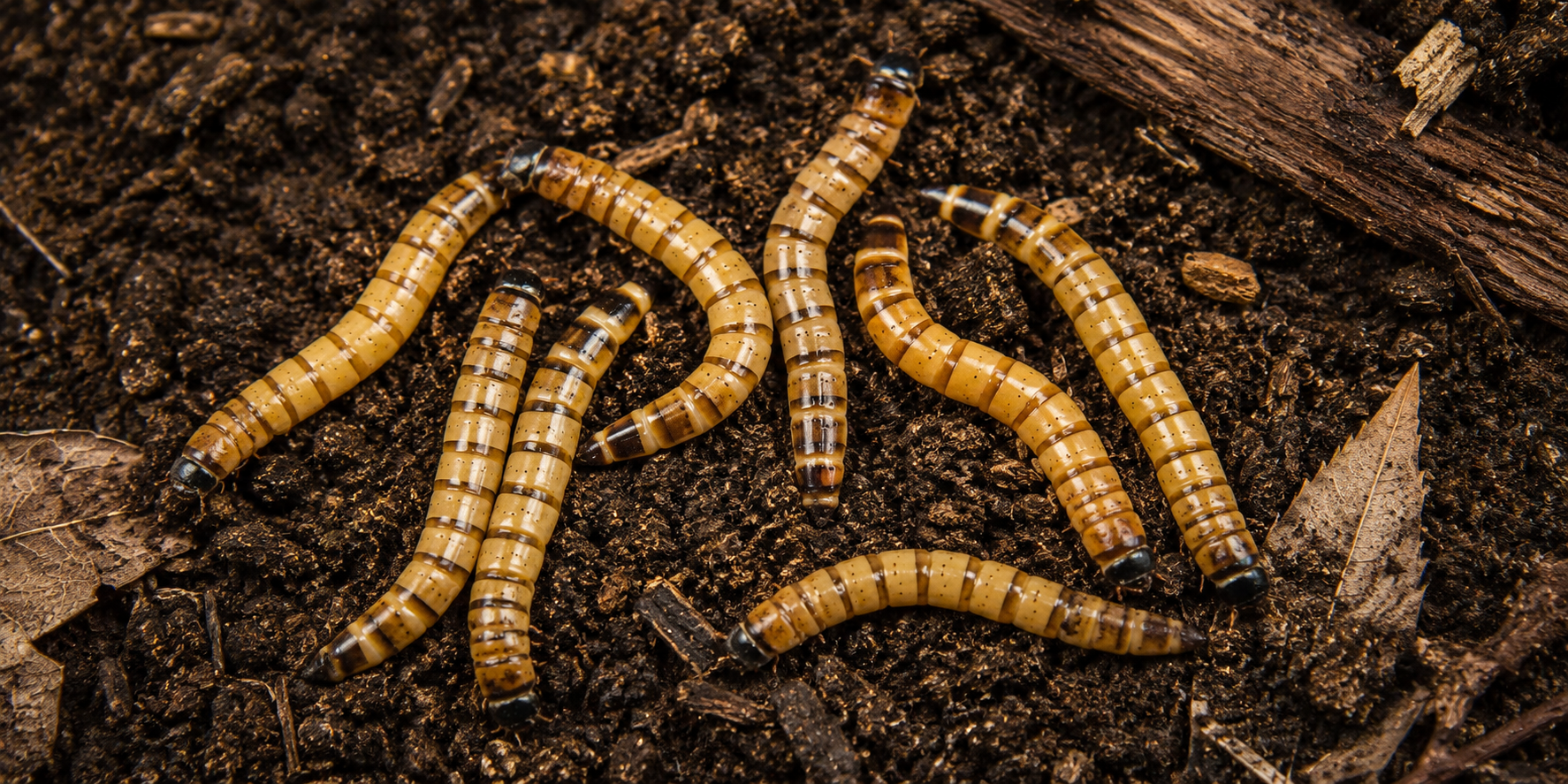
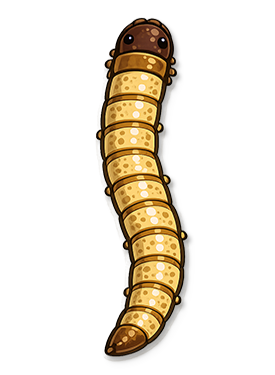
Superworms are the larvae of a large tropical darkling beetle, essentially mealworms’ bigger, meatier cousins. Their size, softer shell relative to body mass, and active wriggling make them a favorite for medium and large reptiles, amphibians, and even birds and fish.
Nutrition Facts
Superworms are hearty but rich, closer to an indulgence than a lean staple:
- Protein: 17–20% (good quality, on par with mealworms)
- Fat: 14–18% (high, so portion carefully for less active pets)
- Moisture: 57–60% (moderate)
- Fiber: 2–3% (proportionally less chitin than mealworms, easier to digest for their size)
Role in the Diet
Superworms shine as a treat or rotational feeder for larger animals like bearded dragons, leopard geckos, and monitors. Their wiggling triggers strong feeding responses in even picky eaters, and their high fat content makes them useful for underweight animals or breeding females needing extra calories. They gut-load well on vegetables and grains.
Drawbacks
The high fat content makes them an obesity risk as an everyday staple for sedentary pets. Superworms are also feisty: they can nip, so some keepers crush the head before offering them to slower or more delicate animals. Unlike mealworms, they cannot be refrigerated, since the cold kills them, so they must be stored at room temperature with food available. Their calcium-to-phosphorus ratio is poor, so dust before feeding.
Fun Facts
Superworms have a strange pupation trick: they won’t transform into beetles while surrounded by other superworms. Only when isolated in a small container will one curl up and pupate, which is why they can be kept as larvae for months. And despite the common name “giant mealworm” sometimes attached to them, they’re a completely different species; true giant mealworms are just regular mealworms treated with hormones.