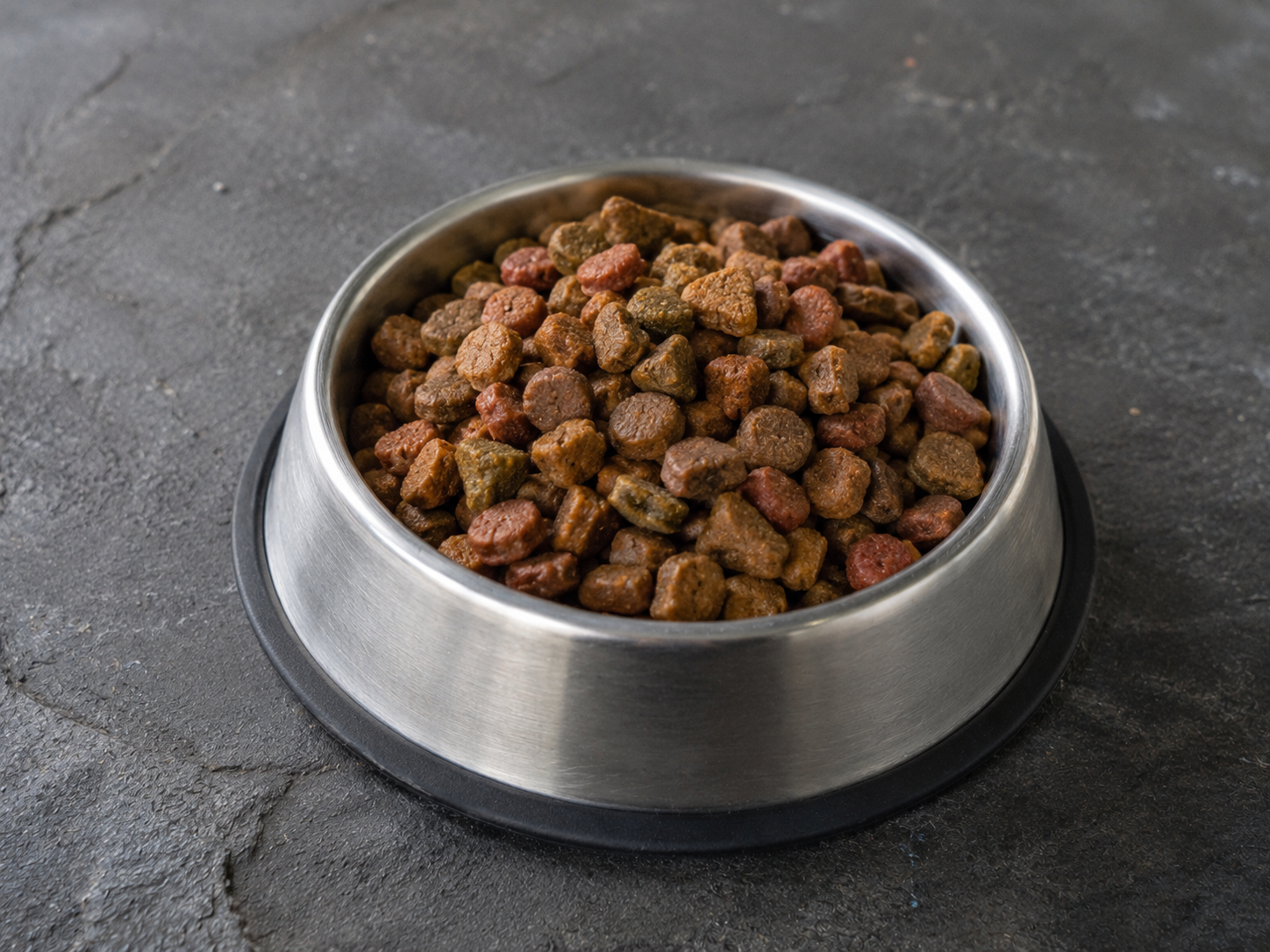
Dry pet food, commonly called kibble, is the everyday staple of the resident dog and cat. It also works for several of the exotic animals: hermit crabs eat it as a protein snack, and feeder insect colonies and cleanup crews accept it readily. Plain, meat-based formulas without artificial colors work best.
Nutrition Facts
Typical as-fed values for quality dry kibble:
- Protein: 20–30% (much more concentrated than wet food, since almost no water dilutes it)
- Fat: 10–18% (energy-dense, a little goes a long way)
- Moisture: 8–10% (very dry; animals eating it need a water source)
- Fiber: 2–5% (varies with the amount of grain and vegetable content)
Role in the Diet
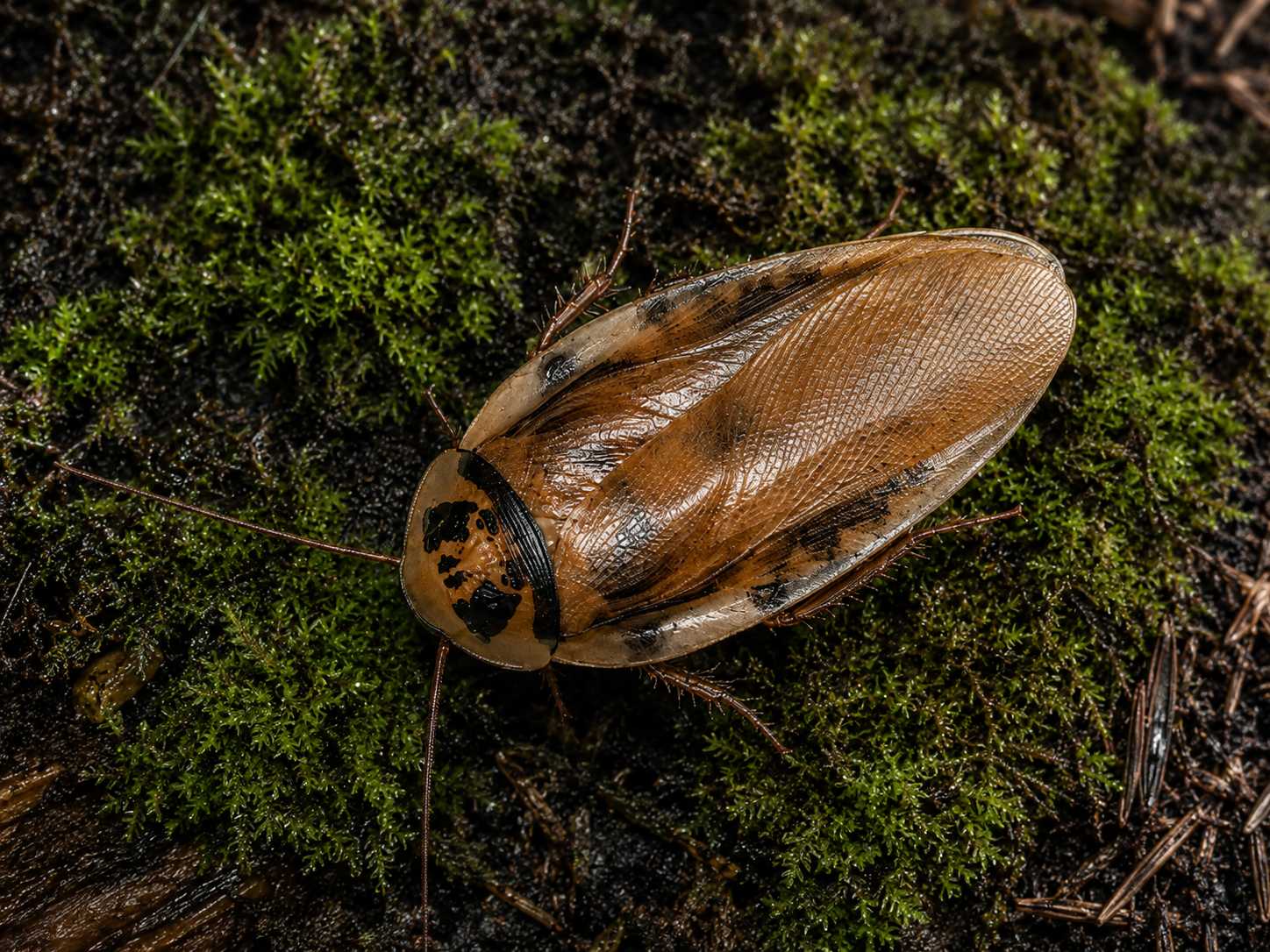
For hermit crabs, a piece of kibble is a slow-release protein snack they can carry off and nibble over hours. Crushed kibble also feeds the working layer of the animal room: dubia and discoid colonies, isopods, and springtail cultures all accept it readily, and gut-loading feeders with kibble passes its nutrition up the chain to the reptiles that eat them. Softened in water, it can stand in for wet food for omnivorous reptiles in a pinch.
Drawbacks
Kibble’s concentration is its main caution: the same density that makes it efficient makes it easy to overfeed, and its near-zero moisture means it borrows water from the animal digesting it. Quality varies widely between brands, with cheaper formulas padding out the meat with corn and by-products. In humid enclosures, uneaten kibble softens and molds quickly.
Fun Facts
Kibble’s uniform shape comes from extrusion, the same cooking-and-pressing process that makes breakfast cereal, adopted by pet food makers in the 1950s. And in bioactive setups, kibble is a favorite trick for keeping cleanup crews thriving: a single piece tucked under a leaf feeds isopods for days.