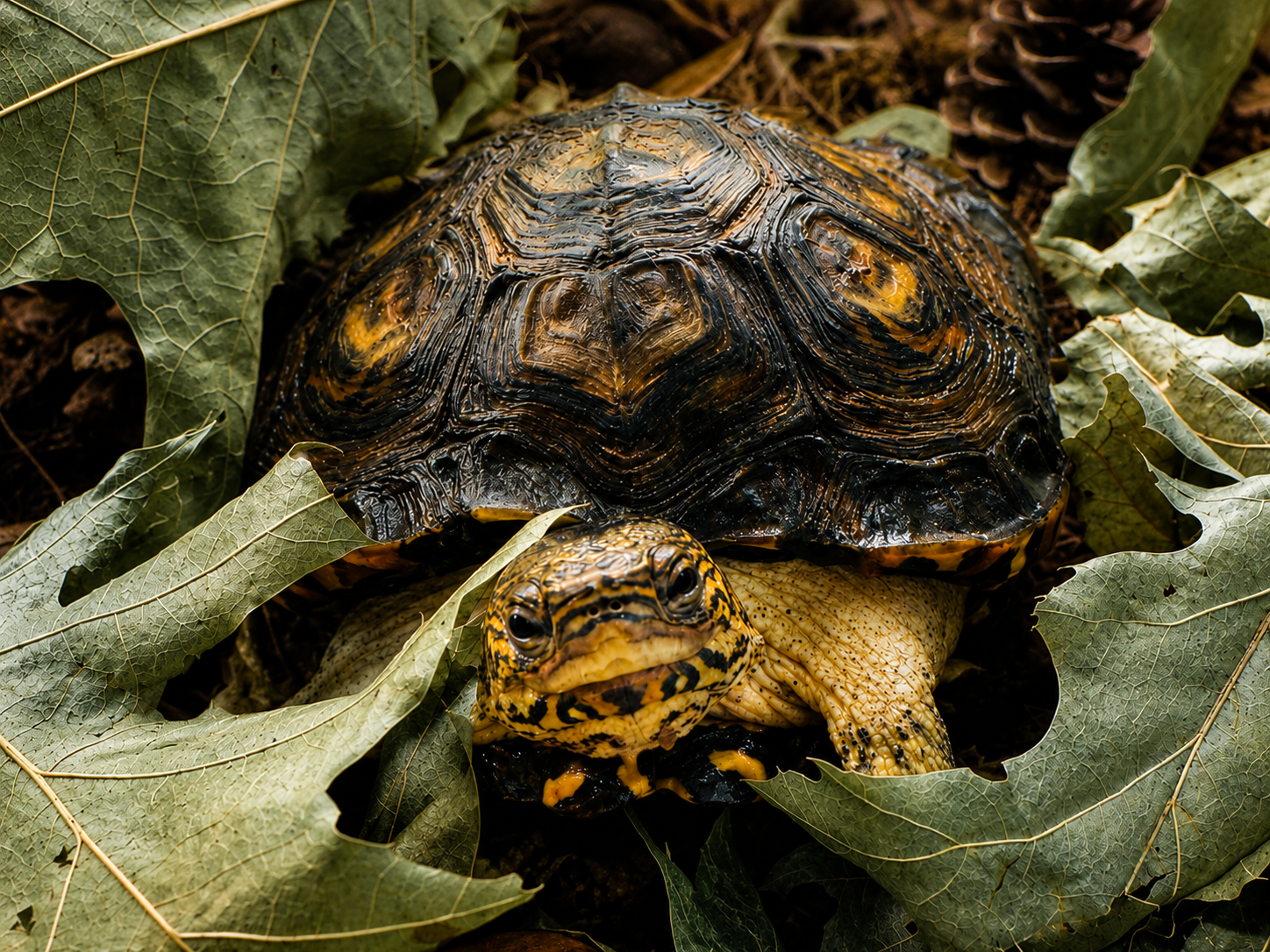
Willow the box turtle acts less like a reptile and more like a very slow dog. She trundles over to greet me, begs shamelessly at feeding time, and supervises household activities from her basking spot, which is probably why she’s one of my favorite animals in the collection. She came to me as a rescue, handed over by a young woman who found her stuck in a dry 20-gallon tank.
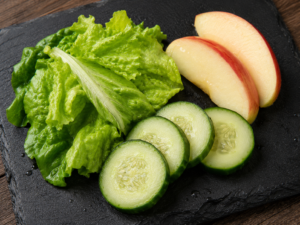
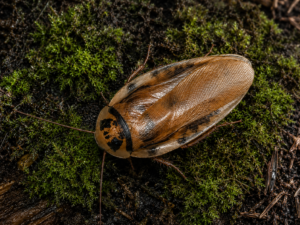
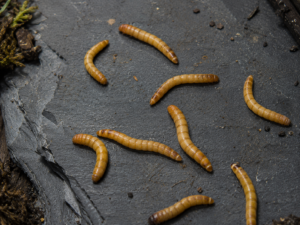
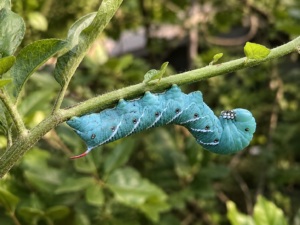
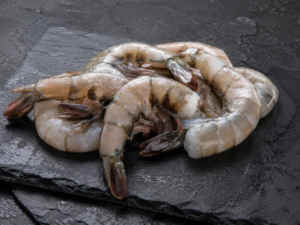
She started out here in a humble turtle box, but it quickly became clear she was destined for bigger things, and today she holds court in a 4 foot circular enclosure right in the center of my living room. Her shell shows some slight bumps from her early years without UVB lighting, which turtles need to build strong bones and shell. That old damage is permanent, but she has proper UVB now, and she spends her days happily rotating between soaking, basking, and patrolling her domain for worms and bugs. Her favorite treats are raw shrimp and apple slices.
Eastern box turtles (Terrapene carolina carolina) are native to the woodlands and meadows of the eastern United States. Unlike water turtles, they live on the forest floor, though they still love a good soak. They get their name from the hinge on the bottom of their shell, which lets them pull everything in and close up completely like a box, a trick almost no other turtle can do. With good care they can live 50 years or more, and wild ones have been documented passing 100.
Fun fact: box turtles have a powerful homing instinct and spend their whole lives in a home range about the size of a couple of football fields. If moved somewhere unfamiliar, many will spend the rest of their days trying to walk home. Willow, luckily, seems to have decided that home is a living room with an all-you-can-eat worm buffet.