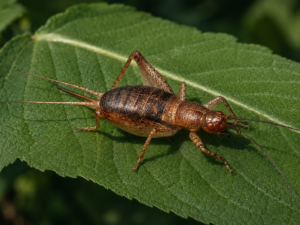
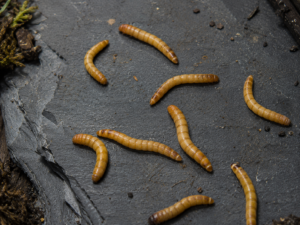
Nessie is named after the famous Loch Ness monster: iconic, beloved, and almost never seen. She’s strictly nocturnal and spends her days buried in the substrate or tucked into a hide, emerging after dark to patrol her enclosure. Spotting her out and about is a small event, and the live camera is honestly your best chance. Her diet is simple, as she has firmly decided that crickets are the only food worth eating.
Chubby frogs (Kaloula pulchra), also called Asian painted frogs or banded bullfrogs, come from Southeast Asia, where they range from Thailand to Indonesia. They belong to the narrow-mouthed frog family, with a round body, a small pointed face, and a preference for smaller prey. They’re natural burrowers, disappearing underground during dry spells and emerging after rain, when males gather around temporary pools and produce a surprisingly loud, bellowing call. With good care they can live more than 10 years.
Fun fact: when threatened, a chubby frog inflates its body and stands tall on stiffened legs to appear too large to swallow, while secreting a sticky substance that discourages predators from trying. Between that defense and her talent for staying hidden, Nessie has survival figured out from both ends.
Animal Profile
| Species Group |
Amphibian |
| Scientific Name |
Kaloula Pulchra. |
| Common Name |
Chubby Frog |
| Sex |
Unknown |
| Source |
Magazoo |
| Acquisition Date |
April 7, 2026 |
| Time in Collection |
0.3 years |
| Native Region |
Southeast Asian Lowland Forest, Thailand |
Native Region
Every animal in the collection is native to a specific region, which is marked on the map below.
Enclosure Setup
Reptiles and amphibians depend on their enclosure to provide the right space, heat, and light that their bodies can’t generate themselves. This table includes information about this enclosure’s dimensions, type, and heating and lighting equipment.
| Enclosure ID |
I |
| Enclosure Type |
Glass Terrarium |
| Length |
18 inches |
| Width |
18 inches |
| Height |
18 inches |
| Floor Space |
2.3 square feet |
| Volume |
25.2 gallons |
| Heat Lamp |
No |
| UVB Lamp |
No |
Enclosure Climate
Reptiles and amphibians require specific environmental parameters to regulate their temperature, digest, and stay healthy. The charts below show the live soil moisture, air humidity, and temperature inside the enclosure.
Bioactive Setup
A bioactive enclosure is a self-sustaining ecosystem where live plants, natural substrate, and invertebrate cleanup crews break down waste the way a forest floor does. This table includes information about how this enclosure’s system is set up.
| Drainage Layer |
1 inch |
| Substrate |
Organic Soil, Coco Coir |
| Substrate Depth |
5 inches |
| Leaf Litter |
Forest Floor, Sphagnum Moss |
| Live Plants |
Yes |
| Cleanup Crew |
Isopods, Springtails |
| Mistings Per Day |
3 |
| Misting Duration |
30 seconds |
Staple Foods
Staple foods provide the macro and micronutrients an animal needs to stay healthy, from protein and fat to calcium and vitamins. Below are the food sources that make up most of this animal’s diet.
Occasional Treats
Treats add variety and enrichment, engaging an animal’s sense of taste and its instinct to hunt. Below are the foods this animal enjoys from time to time.
Enclosure Timelapse: Past Hour
Snapshots of the enclosure from the last hour, taken five minutes apart and replayed as a timelapse.
Enclosure Timelapse: Past Day
One snapshot of the enclosure from each of the last 24 hours, replayed as a timelapse.
Enclosure Heatmap: Past Week
Movement detected between camera snapshots, overlaid on the enclosure between 9 AM and 9 PM. The deeper the red, the more this animal has been active in that spot.
55,778 motion events recorded